
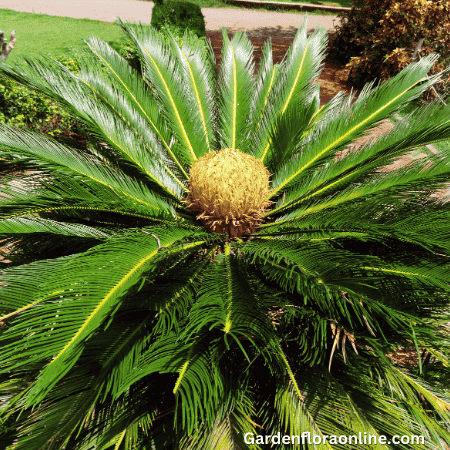

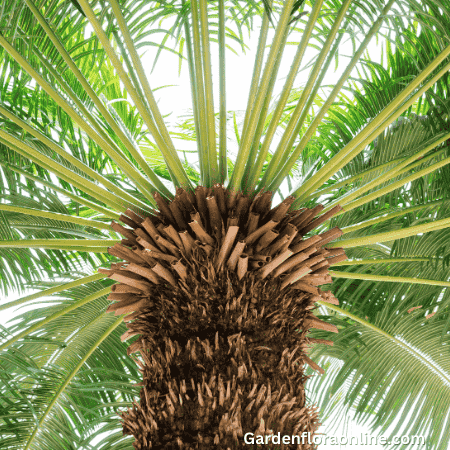
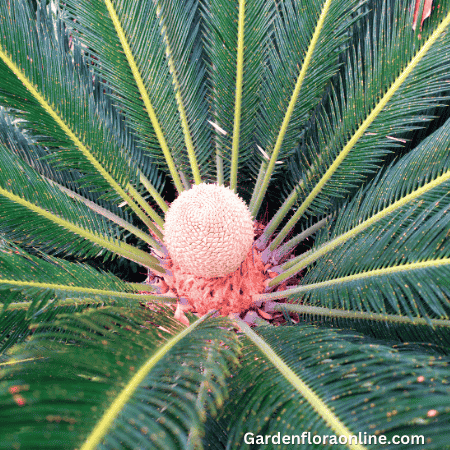
Dioecious evergreen palm-like plants, upright, often suckering; females from base, males branching from apex post-coning; height to 5 m, typically shorter; slow-growing. Leaf scars, persistent leaf bases present. Leaves pinnately compound, 1–1.5 m long, in rosettes; leaflets to 18 cm long, 7 mm wide, glossy green, sharp apex, revolute margins, stiff, leathery; leaflets at rachis base reduced to prickles; petiole spinose.
Cultivation: Grows in full sun to partial shade, tolerates various well-drained soils, and is moderately salt-tolerant. Propagation involves mature seeds with fully developed embryos or rooting of side shoots.
Etymology: The genus name “Cycas” is derived from the Greek word koikos, historically used to refer to a type of palm, reflecting its resemblance to palms. The species epithet “revoluta” is Latin for rolled back, describing the plant’s leaflets, which curve downward along their edges.