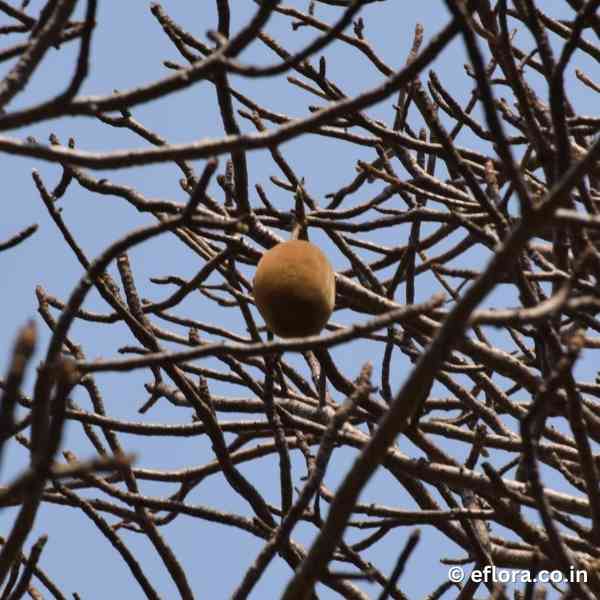
Adansonia digitata (African Baobab)
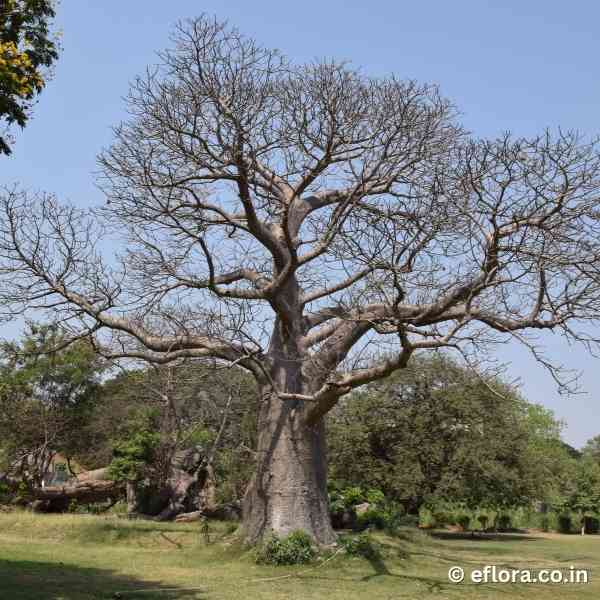
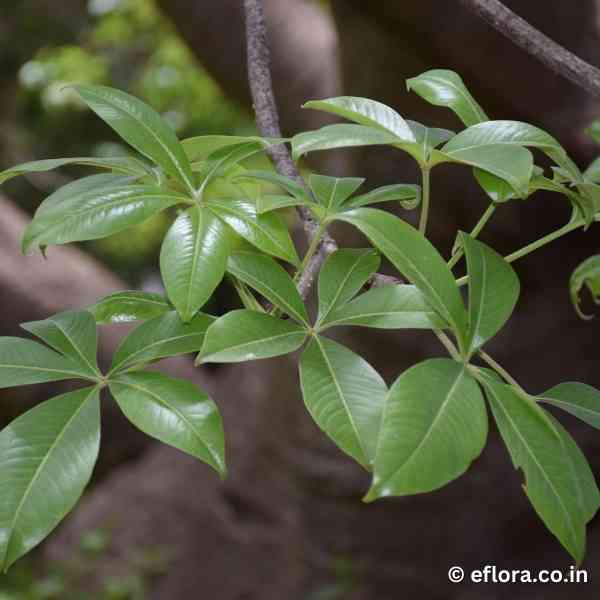
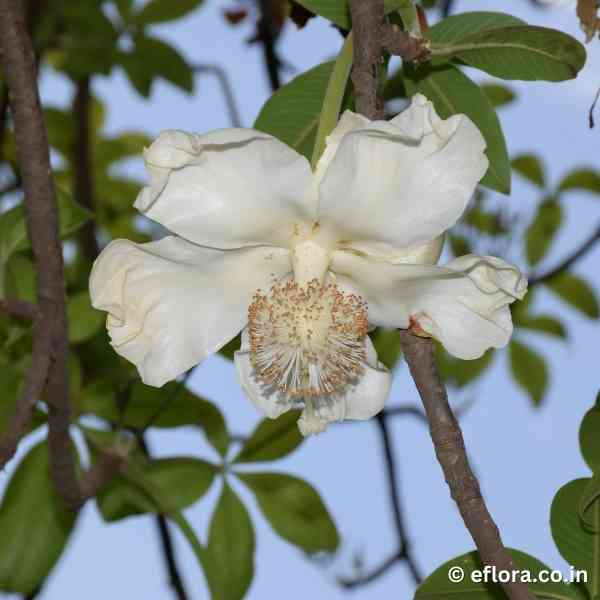
A massive, deciduous tree with a trunk that has an enormous girth, able to grow up to 25 m tall. Leaves are borne at the ends of branches, which are usually divided into 5-7 leaflets attached to a central point. Flowers large, white and pendent on long stalks. Fruits more or less cylindrical. Each fruit is filled with mealy pulp containing many small, dark brown seeds.
Flowering & Fruiting: May-April.
Cultivation: Thriving in full sun and well-drained soil, this plant can handle sporadic drought, though occasional irrigation can boost growth. Its propagation is achieved through seeds, requiring removal of powdery materials, followed by hot water treatment.
Etymology: The genus name Adansonia honours Michel Adanson (1727-1806) a French surgeon and botanist, who extensively studied African flora [11]. The specific epithet digitata is derived from the Latin word digitus, which means finger. It refers to the hand-like appearance of the baobab’s leaves, which are composed of multiple leaflets radiating from a central point, resembling the fingers of a hand.